Alexis Loison: Doublehanded Sailing Tips
WINNING WHEN YOU’RE TWO-UP
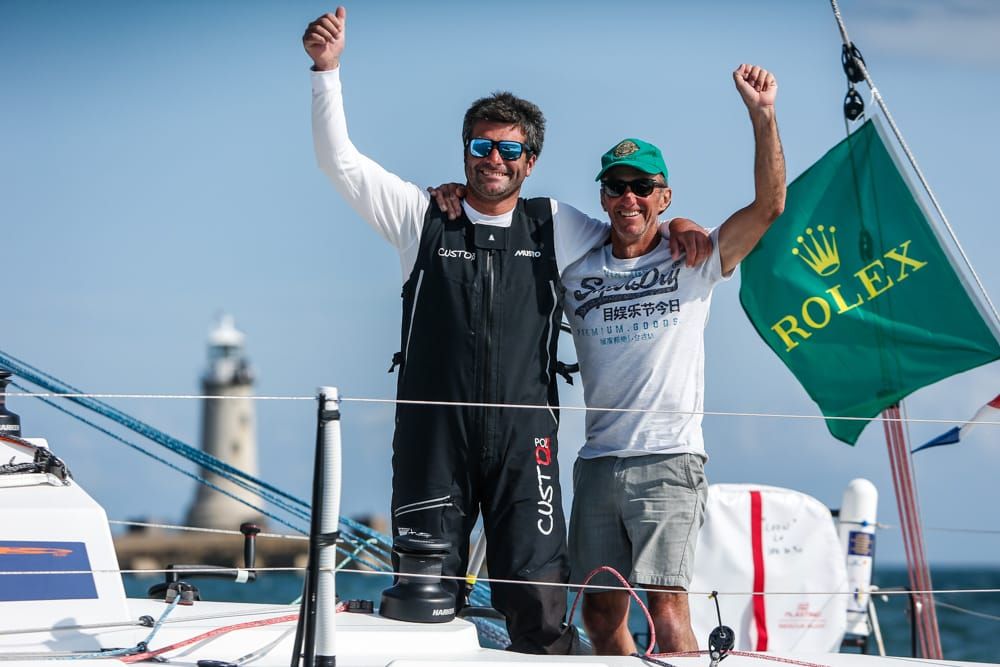
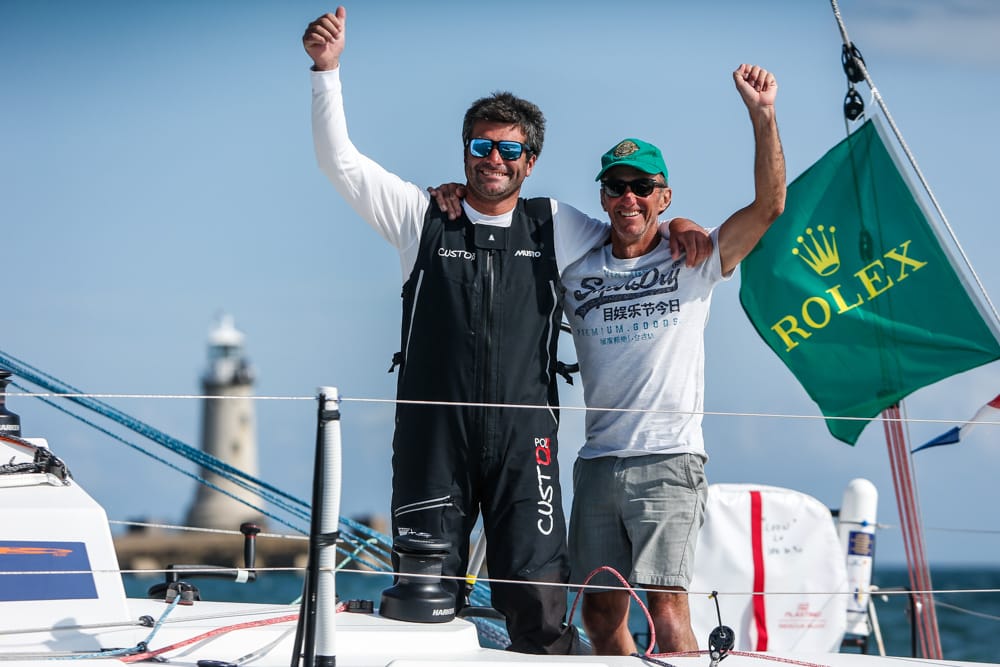
ALEXIS LOISON is a talented professional sailor who competes regularly on the Figaro circuit. He’s also been part of the winning crew in the Rolex Sydney Hobart Race. However his biggest claim to fame came in 2013 when Alexis and his father Pascal raced their JPK 10, Night and Day, to become the first doublehanded crew ever to win the Rolex Fastnet Race; not just in their class, but outright, ahead of all the fully crewed boats. He has since won his class and the doublehanded division in subsequent editions of the Fastnet Race as well as enjoying great success elsewhere on the offshore circuit.
INTRO
The popularity of doublehanded sailing is on the rise. This year Cowes Week is running a doublehanded category for the first time. So why is two-up catching on in such a big way? According to Alexis Loison, it’s partly because the logistics are much easier to organise with just two of you, rather than having to pull together a full crew of seven or more people all with different levels of commitment. Also the quality of the autopilots coming out on the market now make it much easier to handle a boat shorthanded. But for Loison the main attraction is that there is never a dull moment. No sitting shivering on the rail for hours at a time, providing nothing more useful than ballast. “When you’re sailing doublehanded, you have the helm, you navigate, you are busy during all the manoeuvres. There’s never a dull moment.” On the next page Alexis offers five of his top tips for successful doublehanded racing.
1. FORGE A PARTNERSHIP
It’s really important to team up with someone who you like and who you respect. You have to have a similar outlook on sailing and on how you approach competition. With my father, I couldn’t find a better co-skipper; he’s the man who knows me the best, and that’s very important. When you team up with someone for the first time, make sure you have both discussed everything in detail before you go afloat; how you will communicate, how you divide the roles, what weather you expect. It’s all about agreeing the processes in advance, and having your systems in place. Routines are vital.
2. CHOOSE THE RIGHT BOAT
I love Class 40s, they are fast, powerful boats. But for two-handed racing a two-tonner is not all that much fun. The gear is big, and the boat is maybe two powerful in some ways, and it feels like the boat is in control of you, rather than you being in control. A 33-footer, like the GPK10 that I sail with my father, that’s my favourite size of boat. It’s small enough to make it easy to change a sail; it is what I call a ‘human’ boat! Of course the boat is not the whole answer. Whichever one you choose, it’s important to really know your boat, to have practised all the manoeuvres so there is no hesitation about what to do. When it’s blowing hard in the middle of the night, you have to be ready.
3. TWO RUDDERS BETTER THAN ONE
While we were racing in the Fastnet that we won overall, we found ourselves in a match race with another JPK10, pretty much identical to us except it was fully crewed. We were both reaching along in 25 knots of wind, yet despite them having more crew weight on the rail, we were faster in a straight line. Why? Because our boat has two rudders and their’s only had one. They suffered a number of broaches while we didn’t spin out once. Two rudders give you so much more stability and control, which is even more important when you consider how reliant we are on the autopilot when racing doublehanded. Two rudders are definitely better than one.
4. PREPARE FOR THE WORST
Before a big race we do a lot of weather preparation. We look closely at the grib files, we analyse all the currents. We use Adrena which is a really good tool for helping with your navigation plans. We make up a little route book with key points for different parts of the race. Also, we talk through worst-case scenarios about what we’ll do if a sail breaks, and so on. Be meticulous about your safety planning, double-check your lifejackets, the life raft, and so on. We have a little EPIRB and personal AIS system all connected into the autopilot. So if one of us falls overboard and there is a signal loss to the boat, this sends an automatic message saying that there is a MOB incident and logging the position of when the MOB happened. Fortunately we haven’t had to use it, but it’s good to know it’s there.
5. NO WATCH NEEDED
A regular watch system might work for a fully crewed boat, but my father and I don’t run a regular system. If someone is tired, they should sleep. In terms of how we run the boat, my father is the boss. It’s his boat, he’s the skipper. But then I have more experience than him because I am a professional sailor. I went to the best offshore school with the Figaro class. So while he tends to make the big decisions, I focus on the speed and performance. Of course we discuss things a lot and we nearly always agree so we don’t have a problem here. We have a similar approach to how we like to run things on board. For food, we use mostly freeze-dried although we take a lot of fruit, a little soup, and we drink a lot of coffee. Oh, and a little bottle of rum. But we don’t touch that until we’ve crossed the finish line!