Dean Barker: Get in your Upwind Groove
DEAN BARKER is one of the big names of the modern America’s Cup. The former skipper of Emirates Team New Zealand, SoftBank Team Japan and American Magic has also been at the forefront of the big boat circuits like the TP52 and RC44 fleets. This understated Kiwi is well recognised for his ability to steer any keelboat with pinpoint accuracy, able to extract that all-crucial final 0.1 knot of boatspeed which can make the difference between winning and losing.
INTRO
The ability to get your boat in the groove, finding that sweet spot, is one of the marks of a great helmsman. However, the helm is only as good as his trimmers, and it’s the interaction between helm, mainsheet trimmer and headsail trimmer that really enables to get the boat singing. Then the wind changes, or you have to tack, and now you have to get back into the groove all over again. Dean Barker offers five of his best tips for hitting your target boatspeeds more of the time, and more often than your opposition!
FIND YOUR BOAT’S HOT BUTTON
Every boat has its vices, things that it likes and doesn’t like, and the key is trying to figure out those quirks as quickly as you can. Some boats always have you heaving on the tiller or the steering wheel and others are very light on the helm and offer almost no feedback. But the one thing I'm always trying to find is a forgiving setup, one that gives you some freedom to sail around the waves and through changing conditions. As the wind or the waves increase, you need to give yourself a wider groove to be able to sail in. And as the conditions get lighter you are most looking to generate a lot more power and load on the boat so that it actually becomes easier to lock in to the groove. Keep in mind that your overriding aim is to create a set-up that is easy to sail in a variety of modes.
BUILD A TELEPATHIC CONNECTION WITH YOUR TRIMMERS
The relationship between the helmsman and the trimmers is absolutely key. Probably the most important of those is with the mainsail trimmer, because he has the ability to load or unload the helm with only a couple of adjustments. On the other hand, the jib trimmer is more about balancing the boat overall, feeding into the bigger picture. The more you can sail with the same combination of people, the stronger you become. The helmsman should be constantly trying to provide feedback, because that helps provide a baseline of how he thinks the boat is being sailed at any given time. Whether it's right or wrong, it still provides a reference point for the mainsail and jib trimmers to know what they are feeling, and therefore it becomes a little bit more repeatable. It’s good for the jib sheets and the mainsheet to have some marks on them, so that when you do find the boat in a good balance, it's actually quite easy to replicate those sheeting points when you’re going upwind on a different day. It's really learning what you can about the boat, trying to catch the moments where the boat's going well as well as when it’s feeling out of balance, so that you build an understanding of what you might change, and when.
FLAPPING MAINSAIL? EASE THE JIB
It sounds obvious, but the mainsail needs to be set properly. Quite often as you reach the top of the wind range, the mainsail gets quite unstable and unsettled, because you’ve got so much load on the boat and on the headsail. As a result the main becomes quite unbalanced and can end up flapping. Easing the headsail can allow some balance back into the mainsail and can be a good way to get the boat locked back in again. Normally the biggest issue is that the sails are trimmed on too tight and the boat becomes very hard to achieve consistent boatspeed numbers, and it becomes quite tweaky in a lot of ways. Easing the headsail in strong winds will make it easier for you to hit your average target speed.
USE THE NUMBERS OR THE FORCE?
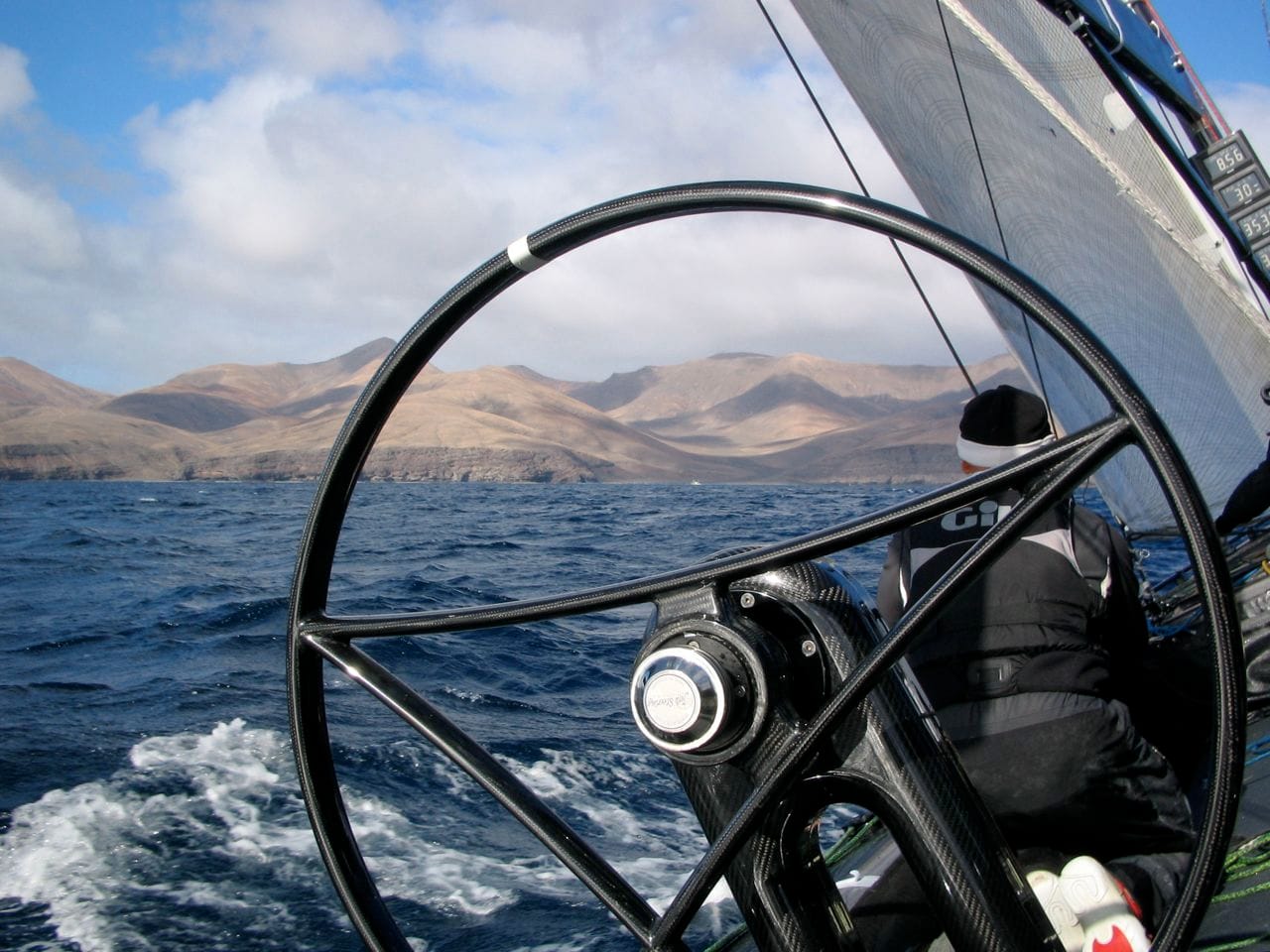
Talking of numbers - ie. the readout on the back of the mast - these numbers are only a tool to help you understand when the boat's going well. You never want to be fully reliant on electronics in the environment that we're operating in - they're not always 100% reliable. So I use the instrumentation as a guide, but not as gospel. It's a reference for when you think the boat's going well, and it's a reference for when you think the boat's not going so well. It gives you the ability to check in relative to where you think it should be. It's a useful tool, but you still need to trust in what you feel and see for yourself and listen to the feedback the boat is giving you.
TUNE WITH A BUDDY
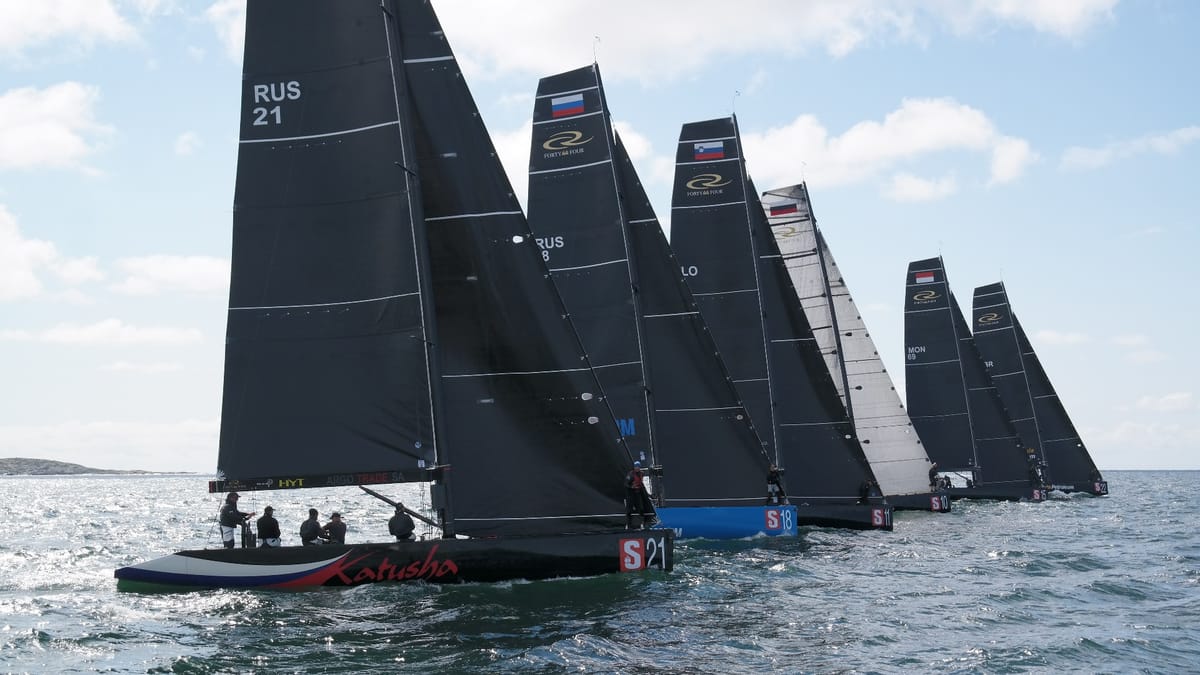
Find someone to train and tune with, and your boatspeed will come on leaps and bounds. That’s particularly true if you’re in a one-design like the RC44. You get direct feedback of how you are doing, so you can make adjustments, do tune-ups before the start or even during the race. You're getting direct feedback as to how it's working. You have obviously got to be careful not to make rash, instantaneous changes because it does take a while to switch into a new mode. If you're trying to make adjustments and sail the boat differently, you need to give it a bit of time. In general, though, you can often see the effects of changes in trimming quite quickly - whether it be sheeting further down on the traveller or sheeting harder on the jib, or anything else. In the RC44 fleet we’re pretty open about sharing information and doing line-ups with other teams, the thinking being that two heads are better than one. If you can make gains with your training partner, the chances are you’ll both be stronger compared with the rest of the fleet. Working together will give you a greater understanding of the settings and when to change and when not to change. Again, your focus should be on trying to find a good all-round setting. It may not be the absolute fastest set-up for a particular condition, but one that provides you with the ability to sail through a wide wind range and maintain a high average boatspeed.