Dylan Fletcher: Getting Ahead at the Leeward Mark
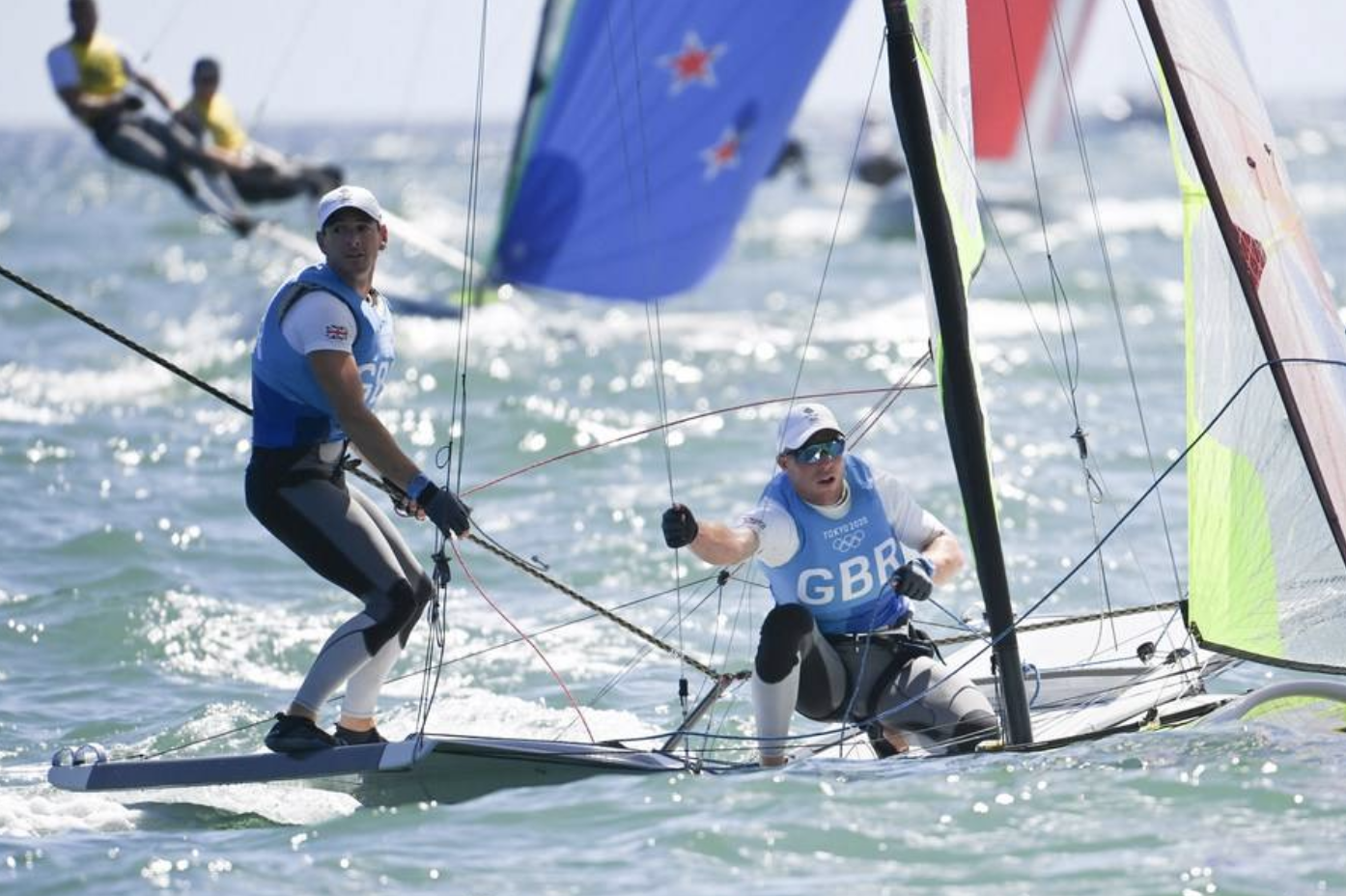
Dylan Fletcher won Olympic gold steering the 49er skiff for Great Britain at the Tokyo Games in 2021. Formerly the skipper of Team GBR on the SailGP circuit until Sir Ben Ainslie took over the reins, Fletcher won the International Moth Worlds and has since become a key part of America’s Cup campaign Ineos Britannia
LEEWARD MARK: A CRITICAL PINCH POINT
The leeward mark is one of the biggest pinch points on the race course, with the opportunity for huge gains or the risk of enormous losses. Dylan Fletcher says the most important ingredient for a successful leeward mark rounding is to start planning well in advance of the moment. “Where are you aiming on the next leg? And where does that mean you need to be positioning yourself halfway down the way down the run in order to get the correct rounding to execute your longer-term race strategy?” This is particularly important at a leeward gate when you have a choice of marks, although the same still applies for single leeward marks. Dylan shares his five best tips for making sure you achieve the entry and, more importantly, the clean exit out of the bottom of the race course.
PREPARE THE TEAM
The bigger the boat and the bigger the team, the more you need to plan ahead for the leeward mark rounding. Make sure everyone knows the long-term plan well in advance, and that everyone is clear about their job during the drop and the rounding. That includes for if and when things go wrong, for example, if the kite drops in the water during the drop. Who’s going to leave their normal post to get up on the foredeck and help get the soggy sail back on board? Over time you should aim to build up a playbook, including the timings for how far in advance you should begin the jib hoist and the gennaker drop in, say, 5, 10 and 20 knots of breeze. The more you can turn the rounding into a predictable procedure that runs like clockwork, the more boats you will pass.
AVOID THE LONG, SLOW SOAK
One of the most critical factors is to make sure you’re coming in to the leeward mark zone at a pretty hot angle with good boatspeed for as long as possible. One of the worst scenarios is finding yourself trying to soak down towards the leeward mark with no speed. It’s not so bad with a symmetrical spinnaker where you can square back the pole, although it’s still not ideal. In a bowsprit boat, soaking down from a high angle, going slow with the sails barely filling - that’s tactical death. So don’t be that boat.
APPROACH ON STARBOARD ON A HOT LAYLINE
The ideal approach is broad reaching in towards the mark on starboard, right on layline, or if it’s light winds even slightly below layline. This will enable you to build as much apparent wind as possible which will carry you through the bad air of the boats floating down from to windward of you. Now is your opportunity to make big gains. A drop-gybe on a small to medium-size keelboat is the best manoeuvre, where you’re coming in on starboard below the bulk of the fleet, dropping the kite on starboard side and gybing at the mark then rounding up tight and in the high lane as you exit the mark on to the new windward leg.
MAKE FRIENDS WITH THE CURRENT
Current can and will have an enormous effect on the way you approach the leeward mark. When you’re punching against a current that’s flowing upwind, be very cautious about dropping the kite too soon. In anything but strong wind, you can be dropping as you’re turning up around the mark. Don’t allow yourself to get caught in that situation where you have dropped early and you’re only just making ground against the current. This is the one time when it’s OK to drop a bit too late and tidy up the mess as you’re being carried upwind on the current conveyor belt. On the other hand if the current is carrying you downwind, err on the side of dropping the kite too soon and be absolutely ready to turn upwind as soon as the bow passes the mark. Even if there is only the tiniest gap between the mark and the boat ahead or on the outside of you, go for the gap! When the current is taking you downwind, once you’re level with the mark, that gap will always open up for you. So don’t be shy, take it.
A CLEAR EXIT STRATEGY IS YOUR MAIN GOAL
Remember what we said earlier about setting yourself up for your overall race strategy? When you have a choice of gate marks to go around, don’t necessarily be tempted by a biased gate and simply go for the shortest distance every time. A biased gate should be just one minor factor in a number of considerations. The main thing is to give yourself the best chance of a clear lane out to the favoured side of the course. So if you know it’s a ‘go left’ course on the upwind legs, most of the fleet will be turning right through the gate and sheeting in on starboard. Rather than fighting for clear air in that long line of boats, a good alternative can be to do go around the left-hand mark and tack immediately, or as soon as possible, on to starboard after completing the rounding. The bigger the boat and the bigger the team, the harder this is to execute, so again make sure that everyone understands that the tack will be coming soon after the leeward rounding is complete. This is just one example of the most important point: keep your overall race strategy in mind when you’re planning and executing your leeward mark roundings. Be prepared to be put up with some short-term traffic and congestion if it ends up giving you a clean lane in the right direction for the next leg.