Robert Scheidt: Winning the Start
ROBERT SCHEIDT is one of the most successful Olympic sailors of all time. It started back in 1996 when he beat Ben Ainslie to the Laser gold medal. The Brazilian went on to win a total of five Olympic medals as well as numerous world titles in the Laser and the Star keelboat. He’s also sailed as part of the Luna Rossa America’s Cup campaign although his passion remains for big fleet competition in small boats.
INTRO
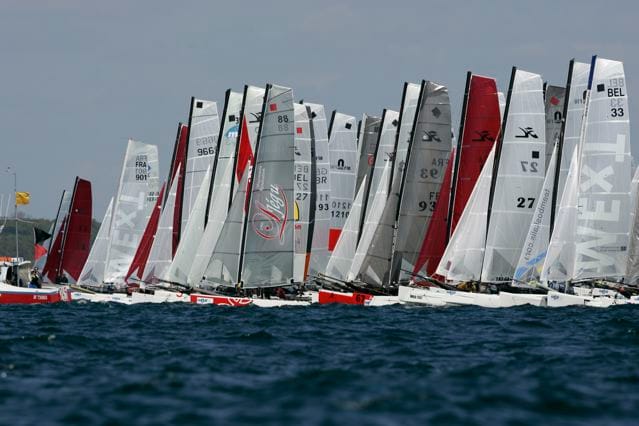
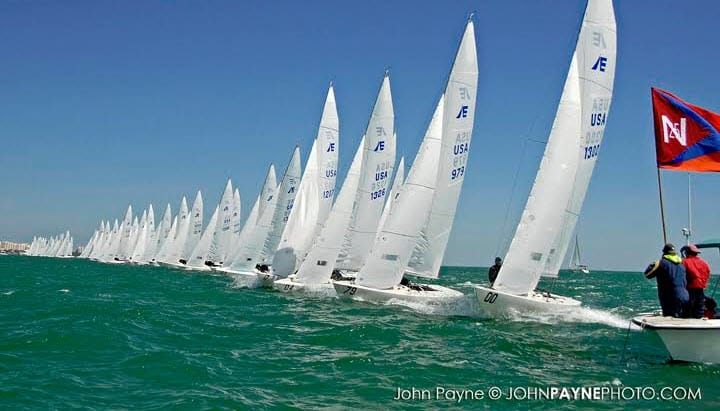
Robert Scheidt always used to start out of the middle of the line. That was in the days when he was the stand-out talent in the Laser singlehander, winning world titles year after year. Robert set the pace for exceptional downwind speed but as the rest of the world closed the gap, the Brazilian admits he should have changed his conservative approach to starting. If you’re aeons faster than your rivals, the start doesn’t matter so much. But for most of us, getting a good lane out of the start is critical for setting us up for the rest of the race. Robert shares his five best tips for being fast out of the blocks, and how to recover if you stumble.
BUILD YOUR PRE-START ROUTINE
I like to be one of the first to get on the water, say, one hour before the race so I can check the course, my settings and get dialled into the conditions. Then, about 10 minutes before the orange flag goes up, I’ll start to check the start line if it’s already been set. I’ll do a few timed runs towards the committee boat end or the pin end, to check the time and distance for the conditions that day. I’ll sail along the line, check the bias with my compass and see which looks like the favoured end. Routines like this are super important. If there’s current, these pre-start checks are even more critical. If you have the opportunity for a transit, take it. And if there are any general recalls and the black flag or the U-flag goes up, remember that most of the fleet will hang back because they don’t want to be disqualified. That’s a great opportunity for you to use your transit, be confident that you know where the line is and move forward and get a great start, even when others are hanging back.
PRACTISE GOING SLOW
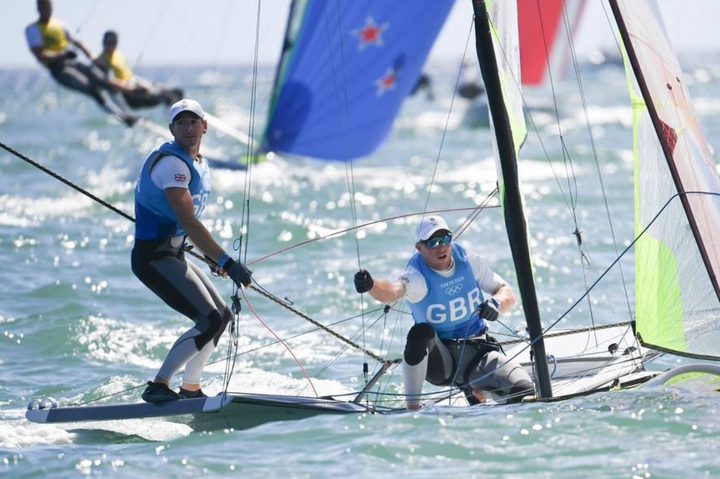
We all want to be able to sail fast, but not everyone remembers that it’s important to be able to sail slow. This is a really useful skill for pre-start manoeuvring. I moved from the Laser into the 49er for a year, and I was amazed how some teams could stay in the same place for four minutes or more, just using their bodyweight and controlling the battens in the mainsail. If you can develop this ability to stand still, you’ll have a massive advantage on the boats around you as you approach the start. Practise your double tacking, reversing, techniques to help you create a gap to leeward. And practise your acceleration drills. Different boats take different amounts of time to get up to full speed. In a Laser it might be a few seconds, but in a heavy keelboat it might be half a minute or more. Most people don’t practise their slow-speed skills, so you’ll have a big advantage if you do.
WEIGH UP RISK V REWARD
Risk management is a big thing at start time. You need to understand your strengths and weaknesses, you have to understand the wind conditions. And and you have to understand the course and which side is paying. There are times that you can be more conservative, let's say if you are really confident that you are fast in those conditions. If the race is long, you have strong winds, you feel fast, you don't have to win a side on the start, then you can be a bit more conservative and start more towards the middle, and use your speed to crack the race open. Whereas if you have for instance, a light air race in a sea breeze, like we had in the Tokyo Games, you can find the pressure is always coming out from the edges of the course. That's the time when you need to be a bit more aggressive at the start because your opportunities to get to the best part of the race course are much more limited.
WHAT’S YOUR PLAN B?
Always have a plan for what to do when things don't go well, which can happen quite often in competitive fleets. A bad start does not mean the race is over, because the boats are still pretty close. There are still opportunities, and the first important thing is not to panic right after a bad start. Because a lot of people just say, ‘okay, I had a bad start, so I'm going to go behind a lot of boats and bang a corner and hope that's the right one.’ They deviate from their original strategy, because they had a bad start. Usually that means they end up making even more mistakes. Be patient, and wait for your moment to get a clear lane back to the favoured side. When I’m sailing on a big boat I share my Plan B with the whole crew, so if anything goes wrong, everyone is dialled in to what we’re going to do next. I've seen a lot of guys having a bad start, but really, really quickly getting back into the race like like that. They find a good lane, they tack in a good place, they can survive, they have good pointing ability, and they're right back into the race.
IF YOU’RE SLOW, START NEAR THE BOAT
If you’re slower than other boats in the fleet, which of course happens all the time in handicap racing, then you need to rethink your starting strategy. Starting to leeward of boats that are faster than you is not a good idea because you’ll get rolled soon after the start and be in their bad air. One of the options when you're slower is to try to win the race committee side or at least be on the windward side of these big boats and be able to tack off and sail free for a few minutes. Because those faster guys are going to be gone very quickly and then you're going to have free air again.