Paul Larsen: Get your Crew up to Speed
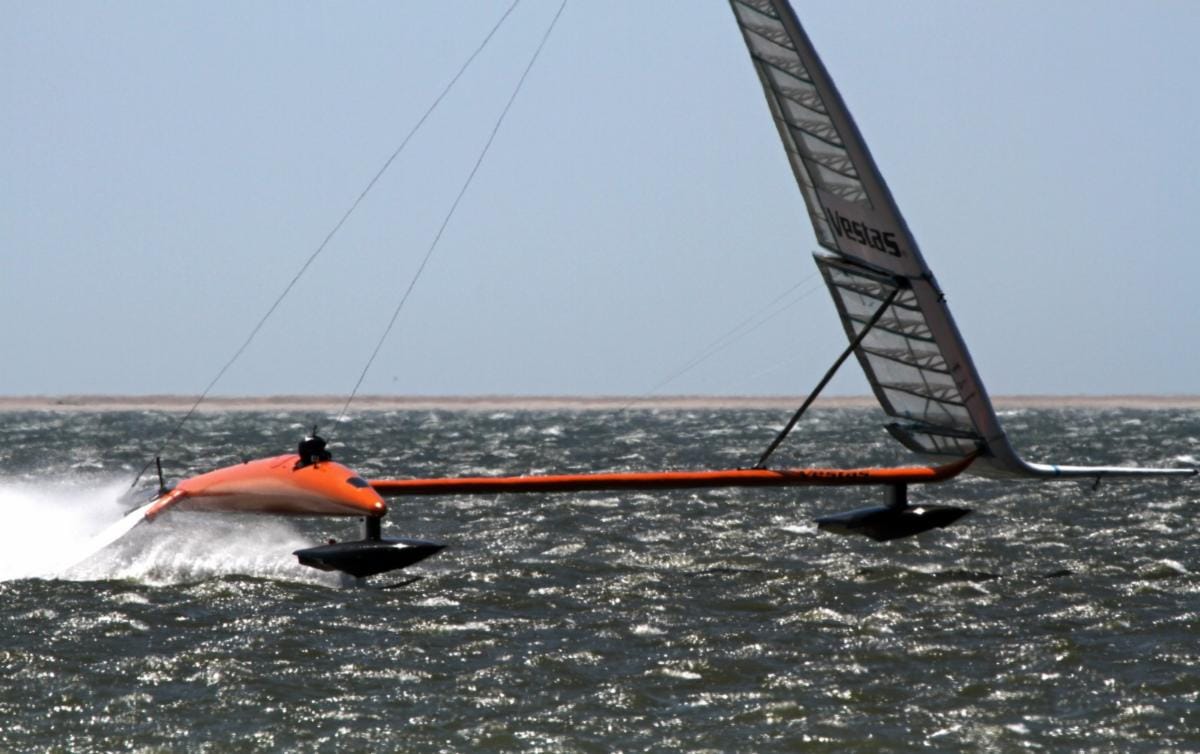
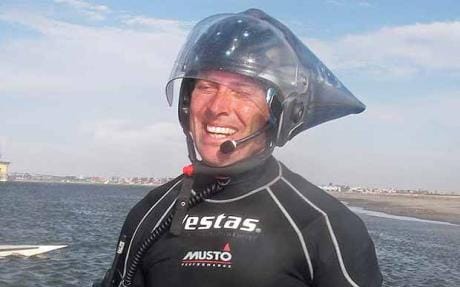
PAUL LARSEN is the fastest sailor in history. In November 2012 the Australian, now resident in Weymouth, steered SailRocket to a new 500m speed record of 65.45 knots, and no one has come close since. Larsen is also heavily in demand on the pro circuit, known for his no-nonsense approach to getting the best out of the boat and the crew.
INTRO
Not only is Paul Larsen clued in to what makes a boat go fast, he’s just as passionate about getting the best out of the crew. Boat speed comes down to identifying and then working on your weaknesses, whether it’s a weakness in your equipment or a problem with the crew work. Sometimes the weakest link might be the owner themselves. After all, they work hard to pay for the boat and the campaign, so probably don’t get as much practice at the helm as they’d like. Which means you set the boat up accordingly. Whatever your weaknesses are, acknowledge them, and create a process for making improvements. This can be easier said than done, because egos can get in the way and people can become defensive. If that’s allowed to persist, the mood will darken, tempers will rise and the boatspeed will drop. But if you can get everyone to buy into a culture of learning and an ability to take constructive criticism, the atmosphere will brighten and the boatspeed will go up. Here are Paul Larsen’s five tips for creating a culture committed to going faster.
1. ASK EXPERTS STUPID QUESTIONS
Don’t be afraid to ask stupid questions, especially if you’re new to a class. Chances are that your questions aren’t stupid, and better to ask than to live in ignorance. Dig out the experts in your fleet. If you’re ordering some new sails, maybe get the sailmaker to come out on the boat with you for a couple of hours and help you set up the boat and show you the ropes. One really useful thing is learning all the crossovers for your boat: when do you change down from the No.1 to the No.2 jib? How close to the wind can you carry the Code 0? All that gear-changing stuff is vital information and it could take you a whole season to learn it by trial and error. Much easier to order someone a drink at the bar in exchange for their hard-earned wisdom. If you don't ask, you don't get. Quite often people are too polite to ask, but the reality is even the big stars in the sailing world are almost always very happy to help you out. I certainly don’t mind being asked, and I always say it's rude to be polite to Australians! Even if you don’t get an answer straight away, keep on hassling until you truly understand the answer, because asking what works and what doesn’t is a sure-fire shortcut to improving your speed.
2. GET THE TEAM ON THE SAME PAGE
When I step on board a boat for the first time, I listen carefully to the communication patterns and the levels of expectation. Are the lines of communication clear and is it helping everyone get their job done in the most effective manner? If there’s a shouter or a screamer on board, then that needs dealing with. No boat ever went faster because someone screamed or shouted louder. Fortunately, the kind of campaigns I’m involved with don’t allow for that kind of behaviour. The further up the fleet you go, the quieter and calmer tends to be the mood on board. If you’re back in 48th place and someone’s yelling their head off, maybe that’s a big part of the reason why you’re in 48th! Sometimes my most valuable contribution can be simply to help sort out the comms within the team. There’s no room for egos. Everyone has to be able to discuss the good, the bad and the ugly without taking it too personally. You need to explain the roles well enough so that everyone on board knows exactly what's happening and what's expected of them. Once you get systems in place for every manoeuvre and every scenario on the race course, the team work and the atmosphere will improve.
3. MEASURE EVERYTHING
Creating systems and managing expectations is a good start. Part of that is making sure that you calibrate everything. Put clear marks on all the sheets and halyards, so that every crew member knows what has worked before and can quickly set the sails to the correct trim for a given wind speed, sea state and situation on the race course. It also means that if someone is missing from their normal role for the day, a replacement can step in and have a good idea of the best settings. It’s all about making your job more easy and more repeatable, leaving the minimum room for error. For example steering accurately at night can be difficult, especially for an owner-driver, so quite often we’ll have an LED light shining up at the bottom set of tell-tales on the jib. Two-boat tuning is invaluable for honing your boatspeed, but it’s not always that easy to arrange and can be time-consuming. More time efficient and arguably more valuable is keeping a detailed log of your progress during a race. It’s worth appointing one crew member - ideally sitting on the rail with not too much else to do - to use a waterproof notepad and keep notes of all the fast (or slow) settings as you’re going along. These can be called upon in the debrief.
4. FILM YOURSELF
In the age of the selfie, everyone’s used to being on film. However, it’s still the exception on boats to have cameras running while you’re sailing. If you haven’t tried it, I thoroughly recommend it. The really high-end professional campaigns tend to use electronic data loggers to record all kinds of information by the second. Which is great, provided you’ve got a few thousand quid to spend, plus someone who’s prepared to spend hours analysing that information afterwards. On the other hand, following the 80:20 rule of getting best bang for your buck, you’ll reap most of the rewards by having just one or two GoPro Hero Session cameras mounted on the boat, maybe one at the transom and one on the back of the mast, keeping track of the choreography of the crew and how you’re really sailing the boat - as opposed to how you THINK you’re sailing the boat. You can even use your smart phone for this stuff. It still needs someone to go back through the recordings, but if you do this, the whole crew will learn and improve much more quickly. And a couple of these little cameras will set you back less than £500. Once again, when things go right or wrong, you now have real info to draw upon.
5. DEBRIEF AT THE END OF EVERY DAY
Always run a crew debrief after every day on the water. This is the time for your human ‘datalogger’ to read back off his waterproof notes and share the information. You may need more time to process the recordings from the cameras, but this footage can be really useful for showing people what’s going on in the heat of the moment during a manoeuvre or a critical phase of the race. Most important of all, it’s vital to create a culture where it’s OK to make mistakes and where you’re encouraged to hold your hand up to them. The quicker and more efficient you can make the feedback loop, the faster you will learn and the faster the boat will go.